 6
Dec,2025
6
Dec,2025
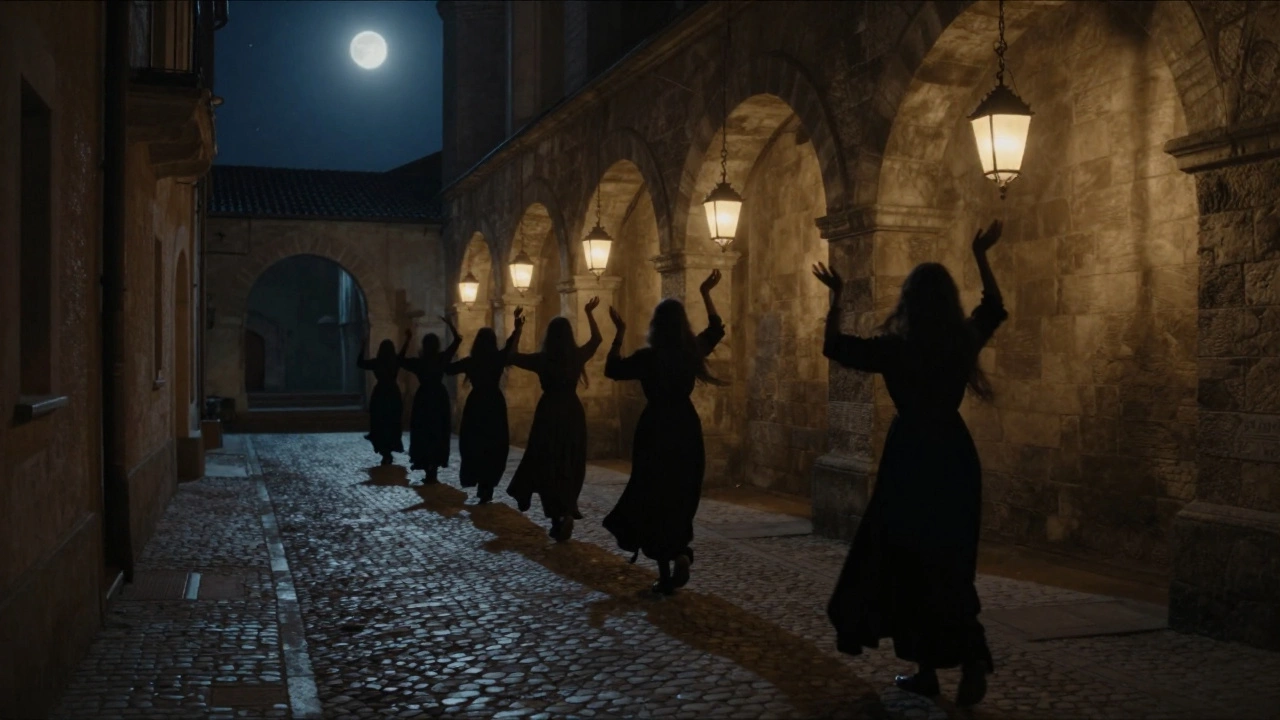
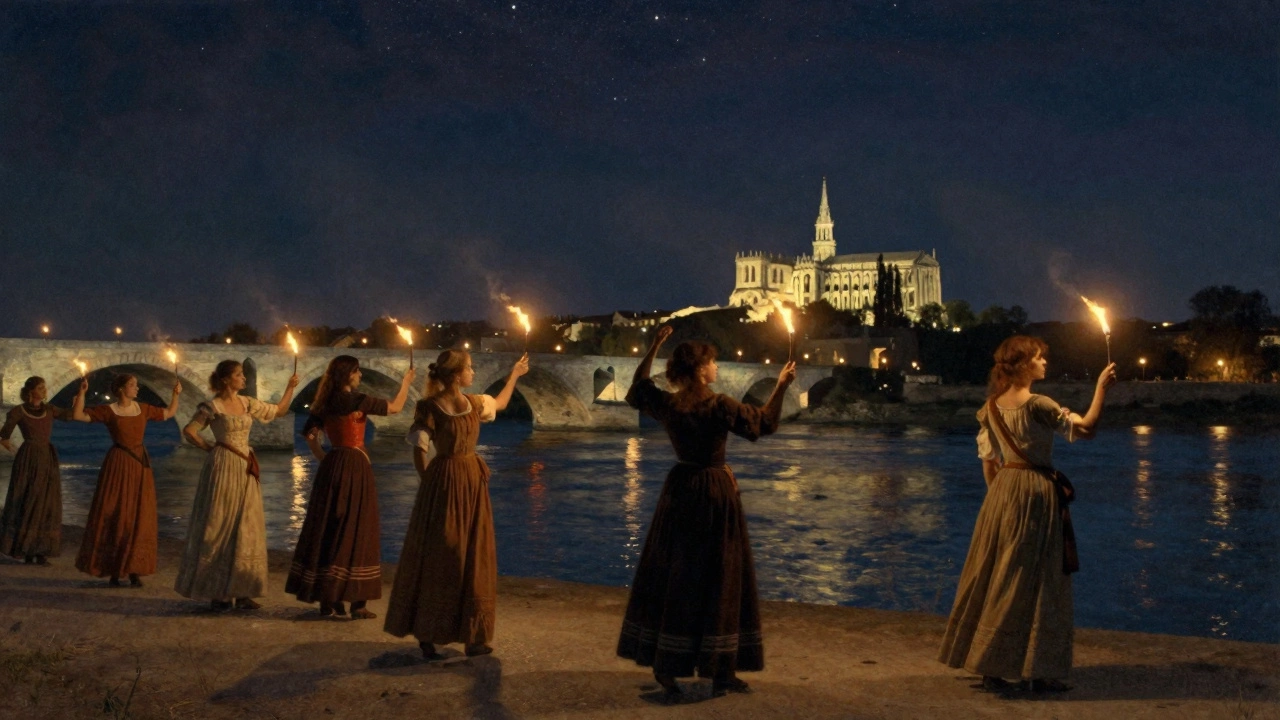
The night air in Avignon still carries the echo of medieval chants, but modern observers might miss the real story - not in the palace walls or the Rhône’s current, but in the quiet defiance of women who once waved torches under starlit skies, not in protest, but in presence. This isn’t about politics or religion. It’s about bodies moving through space, unapologetically, when the world expected stillness. The so-called 'Theory of Avignon' isn’t taught in universities, but it’s lived in alleyways where women gathered after curfew, their silhouettes sharp against lantern light, arms raised not in prayer, but in rhythm - a silent, rhythmic wave that became a language of its own.
Some say it began when a group of dancers from Marseille slipped into the city during the Papal schism, bringing with them a style that didn’t bow to clerical rules. Others claim it was the servants of cardinals who, after long nights of cleaning, found freedom in movement. Either way, the pattern was clear: when the bells rang for compline, the women came out. And they didn’t just walk - they waved. Arms high, hands open, bodies swaying like reeds in floodwater. It was never recorded in official chronicles, but fragments survive in folk songs and the faded ink of letters smuggled out by nuns. One such note, hidden inside a copy of Dante’s Inferno, reads: 'They did not ask permission. They asked for nothing but the sky.'
What the Theory Actually Means
The 'Theory of Avignon' isn’t a theory at all. It’s a practice. A ritual. A quiet rebellion wrapped in motion. Historians who’ve studied the 14th-century archives of the Palais des Papes note a strange absence - no records of arrests, no sermons condemning the gatherings, no royal decrees. That silence speaks louder than any punishment. The Church didn’t ban it because they didn’t understand it. To them, it was just movement. To the women, it was identity.
Each wave carried meaning. A slow, upward arc meant 'I am here.' A quick, sharp flick meant 'I am watching.' A circular motion, repeated three times, meant 'Tomorrow, we do this again.' These weren’t random gestures. They were a coded language passed down through generations, taught by mothers to daughters in the dark, before the oil lamps were lit. No one wrote it down. No one needed to. The body remembered.
Why It Disappeared
By the late 1500s, the waves had grown rare. The city changed. The papacy moved back to Rome. New laws came. Women were expected to be seen only in church, in market, in the home. The torches were replaced with candles. The open fields became walled gardens. The rhythm faded into whispers.
But not everywhere. In remote villages near the Luberon, elders still tell stories of 'the ladies who waved.' Some say if you stand at the edge of the Pont d’Avignon at midnight on the summer solstice, you might still feel it - a breeze that doesn’t come from the river, but from the ghosts of arms raised in unison. It’s not superstition. It’s memory. Human memory lives in motion, not in books.
Modern Echoes
Today, you won’t find the Theory of Avignon in any museum. But you’ll find its spirit in unexpected places. In Istanbul, women in the Grand Bazaar still use hand gestures to signal each other across crowded stalls - not for commerce, but for safety. In Tokyo, late-night subway riders sometimes raise their arms in slow waves when the train is empty, just to feel the space around them. In Dubai, some young women who work long hours in high-rises slip out after midnight to dance on rooftops, their movements silent but deliberate. One of them, a student from Casablanca, posted a video last year that went viral - not for the dance, but for the caption: 'They told us to be quiet. We learned to wave instead.' dubai.escort
These aren’t copies. They’re revivals. The same need. The same refusal to be unseen.
Why This Matters Now
We live in a world that loves to label. Feminism. Liberation. Empowerment. But the Theory of Avignon doesn’t need a label. It doesn’t need a hashtag. It doesn’t need approval. It only needs space - and the courage to fill it.
When a woman moves in a way that defies expectation, she’s not performing. She’s remembering. She’s reminding everyone around her that the body is not a vessel for rules. It’s a vessel for truth. And truth doesn’t ask permission.

The Hidden Patterns
If you look closely at old paintings from Avignon - the ones with blurred backgrounds or women standing too far from the main scene - you’ll notice something. Their hands are never at their sides. Always raised. Always in motion. Even when they’re not dancing. Even when they’re just standing there. Waiting. Watching. Waving.
Artists didn’t paint them that way by accident. They saw it. They felt it. They couldn’t explain it, so they painted it anyway. That’s the real legacy. Not the theory. Not the history. But the feeling that lingers - the one that says: you don’t have to be loud to be powerful. You just have to keep moving.
What You Can Do
You don’t need to travel to Avignon. You don’t need to join a movement. You don’t even need to understand the history. All you need is one night. One quiet moment. One wave.
Stand by your window. Raise your arm. Let your hand open. Let it move upward - slow, steady, like the tide. Don’t think about why. Don’t record it. Don’t post it. Just feel it. That’s all it ever was. A single woman, in the dark, choosing to be seen - not for anyone else, but for herself.
And if someone asks what you’re doing? Just smile. Say: 'I’m waving.'
They’ll think you’re strange. They always do. But strange is the first step to sacred.